How to Shop at an Independent Stationery Store: A Paper Lover's Checklist
October 31, 2026 - Stationery

October 22, 2026 - Daily Practice
Autumn is the season that quietly asks you to begin again. The light thins, the evenings stretch out, and something in the change of temperature makes sitting down with a notebook feel less like a chore and more like a sensible way to spend an hour. It is also the season when good intentions go stale fastest: a vague plan to "write more" survives roughly until the second rainy Tuesday.
What follows is a seven-day reset built for that exact problem. Each day you get one prompt, one short exercise, and one question to answer honestly. Fifteen to twenty minutes, no more. You are not drafting a book this week. You are rebuilding the small, repeatable habit that makes a book possible later.
January resets are loud. They arrive with a gym membership and a spreadsheet and a list of things you are no longer allowed to do. Autumn is quieter and, for writing, more useful. Most of us still carry a back-to-school reflex from years of Septembers — the new notebook, the fresh pen, the sense that the year genuinely starts now rather than in the dead of winter.
There is a practical side too. Autumn is an inventory season: you gather what grew, you clear what did not, you put things away. Applied to writing, that means looking at what you actually produced this year instead of what you meant to produce. That is a far kinder starting point than a resolution.
These are not suggestions. They are the scaffolding that keeps a seven-day plan from collapsing on day three.
Prompt: "What I actually wrote this year." Make a list, in no order, of everything you put words to — the half-finished essay, the long message to a friend you were proud of, the notes app paragraphs, the caption you rewrote four times.
Exercise: Ten minutes of listing. Aim for twenty items. Nothing is too small to count.
Ask yourself: Which item on this list did not feel like work? That one is a clue, not an accident.
Prompt: Go outside for ten minutes — a walk, a doorstep, a bench — and record five specific things you notice. Specific means concrete: not "the leaves were beautiful" but "a wet leaf stuck flat to the kerb like a stamp."
Exercise: Write the five details as bare sentences. No adjectives allowed in at least three of them. Constraints wake up your attention.
Ask yourself: Which detail would you have walked past a year ago?
Prompt: Write 250 words about something that happened in the last seven days that you have not told anyone about. It does not need to be dramatic. A conversation, a small embarrassment, a moment of irritation in a queue.
Exercise: Keep it to one scene. Resist the urge to explain what it meant.
Ask yourself: What made you hesitate before writing that down?
Prompt: Choose a page of prose you admire and copy a paragraph of it by hand. Slow, word by word.
Exercise: Now write a paragraph of your own on your own subject, deliberately borrowing the rhythm of the passage you copied — the sentence lengths, the pauses, the way it turns.
Ask yourself: What did your ear learn that your eye had been skipping?
Prompt: Take the scene you wrote on Day 3 and reduce it by half without losing anything that matters.
Exercise: Then reduce that version by half again. Yes, really — down to roughly sixty words. Meaning survives compression better than you expect.
Ask yourself: What survived both cuts? Keep that. It is probably the real subject.
Prompt: Find something you abandoned — an old file, a notebook from two years ago, a draft you stopped mid-sentence. Read it without judging it.
Exercise: Write one paragraph that continues it, in whatever direction you like. Alternatively, write half a page on why you stopped.
Ask yourself: Was the reason you stopped the reason you told yourself at the time?
Prompt: Write one page to yourself, to be read in December, describing the writing routine you want to have by then. Present tense. Specifics only: which day, which chair, which twenty minutes, what you will do when you are tired.
Exercise: Underline every sentence that describes something you could start tomorrow without buying anything.
Ask yourself: Which of those underlined sentences is already true?
Before you close the notebook for the week, answer these in a few lines each. Blunt is better than elegant.
A reset is only worth the ordinary weeks that follow it. Keep three things. First, the same time slot: whatever hour worked this week, protect it and make it boring. Second, a running note at the end of each session titled "next sentence," so you never open a blank page — you open a page with an instruction on it.
Third, lower the bar on bad days. A two-line entry still counts as showing up, and showing up is the entire mechanism here. If you miss two days in a row, treat the third as a fresh start rather than a debt to be repaid; a routine that requires a perfect record is a routine with a short life.
Then set a date in December — the one you wrote about on Day 7 — to reread that page and see how much of it came true. Most of it won't have. That is fine. The point of the season was never a flawless week of writing. It was the discovery that you can sit down, on any ordinary autumn evening, and begin.
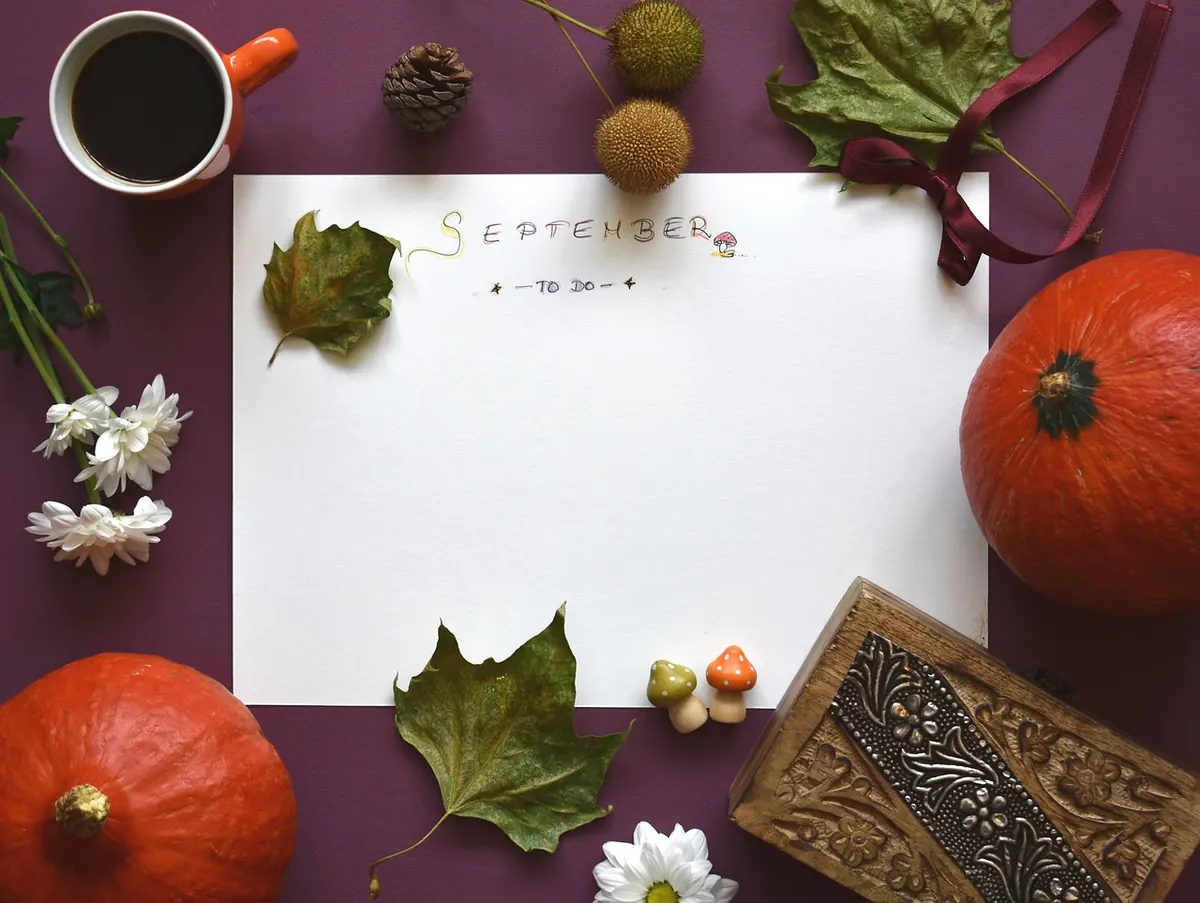
Photo: marijana1 / Pixabay

A practical checklist for shopping at independent stationery shops: how to test paper, ask the right questions about...

A practical comparison of brush pens and dip pens for new calligraphers, covering control, setup, cleanup, cost and...
Copyright © 2026 Amanuense Ogni Giorno. All Right Reserved.